
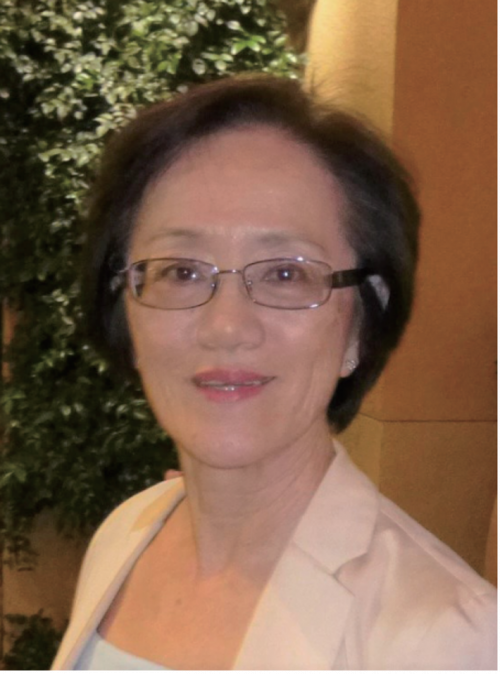
 It was the Lunar New Year in 1988. Then president of South Coast Chinese Cultural Association (SCCCA), Susie Chu, was at the Rancho Senior Center overseeing arrangements for the Year of the Dragon Celebrations. Many long-time Irvine residents remembered this as the first cultural program launched by the Chinese Americans in cooperation with the City. It was to set the precedent for Chinese Americans’ active participation in multicultural programs in the future.
Yet few people know that this festive luncheon had its origins in a misunderstanding. Susie, who moved to Irvine in the 1980’s, fell in love with the city, and urged her mother to move to Irvine as well. Soon she thought her mom may be bored being home alone during the day, as the family members had to go to work or school. So, on her day off, she took her mother to the Rancho Senior Center. The staff greeted them warmly, leaving a very good impression.
One day, Susie persuaded her mom to walk to the senior center on her own, but in less than half an hour, Mom was back and was upset. She greeted the receptionist sitting in a wheelchair, but received back only a blank stare, and felt she was being discriminated against. Susie called the Center and the staff explained that the front desk was being staffed by a volunteer who had suffered a stroke. Her movements and facial expression were relatively stiff. There never was an intentional slight, it was solely a misunderstanding.
This incident made Susie realize that Chinese residents must interact more with the senior center to promote mutual understanding. The Irvine Chinese School (ICS) put on a Lunar New Year event each year. She thought of inviting (non-Chinese) senior citizens, but found that many seniors have difficulty getting around in the evenings, so, with the approval of the SCCCA, Susie decided to bring the Lunar New Year Celebrations to the senior center.
Susie recalls they had the venue decorated with a big oil painting of a dragon given to the Irvine Chinese School by architect Steve Wang, Chinese curios, embroidery, shadow play puppets, and Chinese ornamental knots provided by I-Tuan Wang. Sarah Mar organized a group of students to do the lion dance. There was also folk dancing, and erhu performance. Volunteers were there to teach Chinese knotting. Ruth Ding, founder of OCCCC, got a loan of traditional Chinese costumes. The seniors could don these and have their pictures taken. Restaurateur Chiang (Partner of the Chinatown Restaurant in Irvine) donated spring rolls, fried rice, fortune cookies and other Chinese foods. Several Chinese senior citizens who spoke English were there to help serve tea, food, etc. Finally, there was a drawing for prizes provided by various donors. Without spending a fortune, the event was a huge success. Everyone had a great time and some attendees were teary-eyed.
The success of that Lunar New Year luncheon pivoted the Chinese community to work more closely with the City. Those excited about the idea started to plan a community mainly for retired Chinese immigrants. The Irvine Evergreen Chinese Senior Association (IECSA) was formally established in 1989. Most of the 20+ founding members were grandparents of Irvine Chinese School (ICS) students. At its very first meeting, it elected Hsi-Hsiung Chao as President, and Chung Fan, Vice President, and designated the third Saturday of each month as its meeting date.
At first, IECSA held its meetings in residential community center clubhouses or the public libraries. When the membership approached 100, Susie met with city official George Searcy to discuss the possibility of holding the meetings at the Rancho Senior Center. Once approval was obtained, the membership quickly reached 200, and IECSA became one of the largest groups in the Rancho Senior Center, and it continued its practice of holding the Lunar New Year Celebrations in collaboration with the City.
At the start of the 90’s, Irvine’s population had already exceeded 100,000. Because the Rancho Senior Center could no longer meet the demand, the City started planning a second senior center. As the matter was of direct concern to the seniors, on the day of the public hearing, Susie drove several IECSA Board members to the Civic Center, fully suited, to attend. She was to speak on behalf of the IECSA in support of building the second senior center.
Susie prepared a three-minute speech (in English). She stated that the success of an administration could be measured by how well the city treated its retirees. Since there would be a huge increase in retirees in the following decade, their needs could not wait. Therefore, planning for a second senior center needed to start right away.
Just before she ascended the podium, Director Raymond Fung whispered in Susie’s ear. “When you get up there, just say that IECSA has pledged $100,000 in support of building the senior center!” The statement was greeted with resounding applause. The pledge showed the strong support of the Chinese Americans. The proposal to build the Lakeview Senior Center sailed through the City Council meeting that night.
The Lakeview Senior Center cost $7 million. Aside from the IECSA’s $100,000 donation, the Irvine Company and the Kaiser Permanente Foundation each donated in excess of a million dollars. Susie and Chung Fan were later invited to join the Irvine Senior Foundation, to oversee construction of the Lakeview Senior Center. Susie remembers that when the Foundation met, members were mostly representatives from the Irvine Company, the Kaiser Permanente Foundation and Irvine City Hall. With its $100,000 donation, IECSA became one of the founding organizations, and participated in the ground breaking and ribbon cutting of the Lakeview Senior Center. “As a Chinese American resident, those marked the proudest moments in my memory!”
Since Lakeview Senior Center’s inauguration in 1994, IECSA’s membership has steadily grown. The annual Lunar New Year luncheon is now held on two successive days.
In collaboration with the City, Lakeview Senior Center in 1998 initiated the multicultural Harvest Festival. IECSA Board members Te-Pei Wong and Chung Fan wrote the names in Chinese calligraphy for the visitors. Regina Ling, with her scissors and red paper, snipped away to produce pictures of plants, animals and Chinese characters. Meiling Lee and her folk dancing troupe provided another aspect of the cultural tradition. These programs all received rave reviews. Many were to be adopted by the Global Village Festival in later years. (English translation by Sally Feng)
 (以下文字摘錄自《爾灣華裔紀實1971-2021》一書)
1988 年農曆新年,時任南海岸中華文化協會 (SCCCA)會長的汪亞英在爾灣市政府的 Rancho 老人中心推出為市民舉辦的龍年農曆春節慶祝活動, 那是爾灣老居民印象中,第一次由華人與市府合作推 出的文化節目,開啟了日後華裔積極參與爾灣市多元 文化活動的先例。
但是很少人知道,這場熱鬧慶祝農曆新年的午餐會,緣起自一場誤會。
在 80 年代搬到爾灣的汪亞英,愛上此地生活環境,極力說服母親也搬來爾灣。不久後,她考慮一家人白天上班、上學,母親獨自留守家中難免無聊。於是,汪亞英利用休假期間,第一次帶著媽媽走進爾灣市的 Rancho 老人中心,老人中心工作人員對她們親切招呼,讓母女倆都留下美好印象。
有一天,汪亞英鼓勵母親自己走路去老人中心, 結果不到半小時,媽媽就負氣回家了。原來,汪媽媽和一位坐在輪椅上的接待打招呼,卻獲得冷眼相看, 讓她有受歧視之感。汪亞英為此致電老人中心,中心人員解釋說,前台是一位曾中風的義工,動作和面部表情比較僵硬,絕非有意怠慢,而是無心的誤會。
這件事讓汪亞英意識到華人居民有必要與老人中心多交流,增進彼此了解。爾灣中文學校每逢春節舉辦新年晚會,汪亞英原本想邀老人參加,後來得知不少年紀大的居民晚上不方便出門,於是在 SCCCA 贊助下,汪亞英決定把新年慶祝活動帶進老人中心。
汪亞英回憶說,記得當時借用建築師王友遂送給爾灣中文學校的大型龍年油畫,並由趙儀端提供中式古董、刺繡、皮影戲及中國結等在會場四周展出,表演節目請馮竹悅找學生演出舞獅、民族舞蹈及二胡。 當天現場安排義工教居民打中國結,又向橙縣中華文 化協會(OCCCC)創辦人丁鄧雲燕商借傳統中式服裝,讓大家當場穿上漢服拍照。餐館業者蔣先生(爾灣 Chinatown 餐館合夥人)熱心捐贈春卷、炒飯、幸運籤餅等中式食品,幾位本來就常去老人中心能講英語的華人也主動來幫忙端茶、送餐,最後加上各方贊助的抽獎,雖然花錢不多,卻做得很開心,當天甚至看到有老外感動得眼中泛著淚水。
那場成功的農曆新年午餐會啟動了華人與市府合作的契機,熱心人士開始籌組以退休華人為主的社團,爾灣松柏會就在 1989 年正式成立,20 多位創會會員,大多是爾灣中文學校學生的祖父母,首次開會就推選出會長趙墀熊及副會長范仲,敲定每月第三個禮拜六舉辦月會。
爾灣松柏會最初幾次開會都借用社區俱樂部及公立圖書館,後來由於會員人數近百人,汪亞英與市府官員 George Searcy 洽談,希望能使用 Rancho 老人中心場地,獲市府批准後,爾灣松柏會會員人數很快增加到 200 人,成為 Rancho 老人中心最大的社團之一,並延續每年與市府合作,為居民舉辦慶祝春節午餐會的傳統。
爾灣市在 70 年代人口僅約一萬人,到了 90 年代初期,已成長到十萬餘人,由於 Rancho 老人中心不敷使用,市政府開始籌畫興建第二座老人中心。
由於此事攸關老人權益,市議會公聽會那天,汪亞英開車帶著幾位穿西裝的松柏會理事參加,準備由她代表發言支持興建第二座老人中心。
汪亞英準備了三分鐘的英文稿,她認為,從一個城市如何對待退休老人,就可看出當地市府的管理是否成功,而且未來十年退休人口將大增,老人的需求不能等,現在就要開始籌建第二座老人中心。臨上台前,理事馮理民小聲面授機宜:「你上台講話時,就說松柏會承諾募款十萬元,支持興建老人中心!」這段發言引來全場熱烈掌聲,顯示華人對老人中心的強 力支持,當晚市議會順利通過湖景老人中心興建案。
興建湖景老人中心耗資 700 萬美金,除了松柏會捐款十萬元之外,爾灣公司及 Kaiser Permanente 基金會捐款都在百萬元以上。後來,汪亞英和范仲都獲邀加入爾灣老人基金會,監督湖景老人中心建造過程。汪亞英回憶說, 那時候來開會的都是爾灣公司、Kaiser Permanente 基金會及爾灣市的代表,松柏會捐款十萬元也成為創立組織之一,參加破土及開幕剪綵都有份, 「這是做為爾灣華人居民,最令我引以為榮的回憶!」
1994 年湖景老人中心落成啟用迄今,爾灣松柏會會員持續增長,每年農曆新年要舉辦兩場午餐會。 1998 年與市府合作,在湖景老人中心推出提倡多元文化的 Harvest Festival,由松柏會理事汪德培、范仲現場揮毫,為來賓寫中文名字,還有凌嶺先的剪紙,及李美鴒率領的民族舞蹈節目,讓居民親身體驗多元的文化傳統,大獲好評,日後由市府接辦,成為爾灣地球村節慶。(蕭迪玉撰文)