
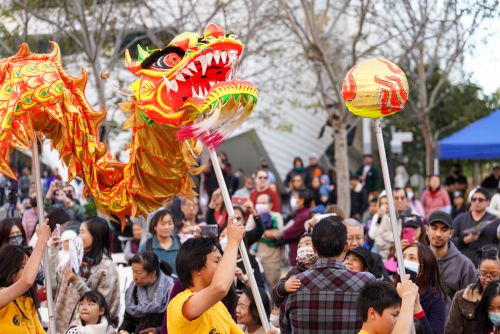
 Chinese people have always had a special feeling for "dragon". The Chinese are not only known as the "descendants of the dragon", but 2024 is also the year of the "dragon" in the Chinese zodiac. There are also many stories about "dragon" in idioms, such as "Ye Gong loves dragons", "Dragon Soaring and Tiger Leaping" and "Dragon Horse Spirit", etc., which shows the important position of "dragon" in Chinese culture.
In addition to the cultural points about "dragon" mentioned above, people also like to watch a performance about "dragon", which is the well-known "Dragon Dance". During the New Year and festivals, Dragon Dance performances will appear in everyone's field of vision. Accompanied by drums and music rich in traditional Chinese rhythm, people control the dragons in their hands to create a sense of sight similar to that of rolling in the clouds and mist. The mysterious rhythm full of Chinese characteristics will infect every cell in the audience's body. This feeling of watching is indescribable.
Dragon Dance is one of the traditional folk cultural activities and a representative of Chinese culture. According to literature, Dragon Dance was originally for sacrifice, not just for viewing and entertainment as it is now. In ancient times, the ancients wore colorful clothes and waved "dragons" made of cloth to "pray for rain", hoping to be blessed by the Dragon King and receive rainfall. Later, this kind of sacrificial prayer activity became a folk activity, thereby expressing people's good wishes for future life, and it was also one of the important activities of festival celebrations.
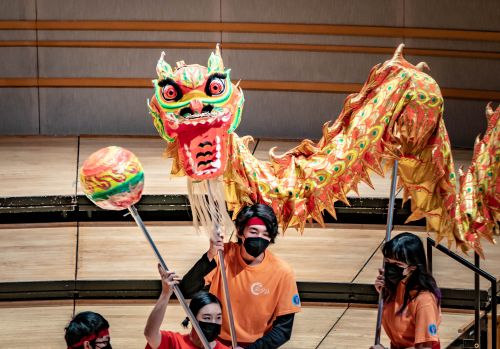
The Dragon Dance performances we often see now are mainly the "Southern Dragon", which originated and developed from the Jiangnan area in southern China. A dragon consists of four parts, namely the dragon ball, the dragon head, the dragon body and the dragon tail. It is usually controlled by 8-10 people. The formations and steps of dragon dance are also diverse. Generally, people will rehearse and adjust according to the needs of the performance, so as to achieve the best dragon dance effect. Recently, our cultural center also purchased several small dragon dances, which are specially performed by primary school students, middle school students and high school students. We are rehearsing in full swing and hope to present our wonderful student dragon dance performance to our friends at the Cultural Center in the near future.
 中國人對“龍”一直有著一種特殊的情懷。中國人不僅被稱為“龍的傳人”,2024年也是十二生肖中的“龍”年。成語中也有許多關於“龍”的故事,比如“葉公好龍”、“龍騰虎躍”和“龍馬精神”等等,可見“龍”在中華文化中的重要地位。
除了上述我們所提到的關於“龍”的文化點以外,人們還非常喜歡看一種關於“龍”的表演,那就是眾所周知的“舞龍”。一到過年過節,舞龍表演就會出現在大家的視野中,伴隨著富有中國傳統韻律的鼓點和音樂,人們將手中的龍揮舞出類似於在雲霧中翻騰的即視感,那種熱烈、神秘、飽含中華民族特色的律動會感染著觀眾身體裡的每一個細胞,這種觀賞感是妙不可言的。
舞龍是中國民族傳統民俗文化活動之一,也是中華文化的一個代表。根據文獻記載,舞龍最初是為了祭祀,而並不是像現在只是為了觀賞和娛樂。在古代,為了“祈雨”而身穿彩衣,揮舞著用布條做的“龍”,希望得到龍王的庇佑,從而得到降雨。後來,這種祭祀祈禱活動就變成了一種民俗活動,從而表達人們對未來生活的一種良好願望,同時也是節日慶祝的重要活動之一。
我們現在常常看到的舞龍表演,它主要是“南龍”,就是從中國南方江南一帶起源發展而來。一條龍由四部分組成,即龍珠、龍頭、龍身和龍尾,一般由8-10人揮舞它。舞龍的陣形和步伐也是多種多樣,一般人們會根據表演的需求來進行排練和調整,從而達到最佳的舞龍效果。最近,我們南海岸中華文化中心也購置了多條小型舞龍,專門由小學生和初、高中生來進行舞龍表演。我們正在如火如荼地進行排練,在不久的將來向文化中心的朋友們獻上我們精彩的學生舞龍表演。